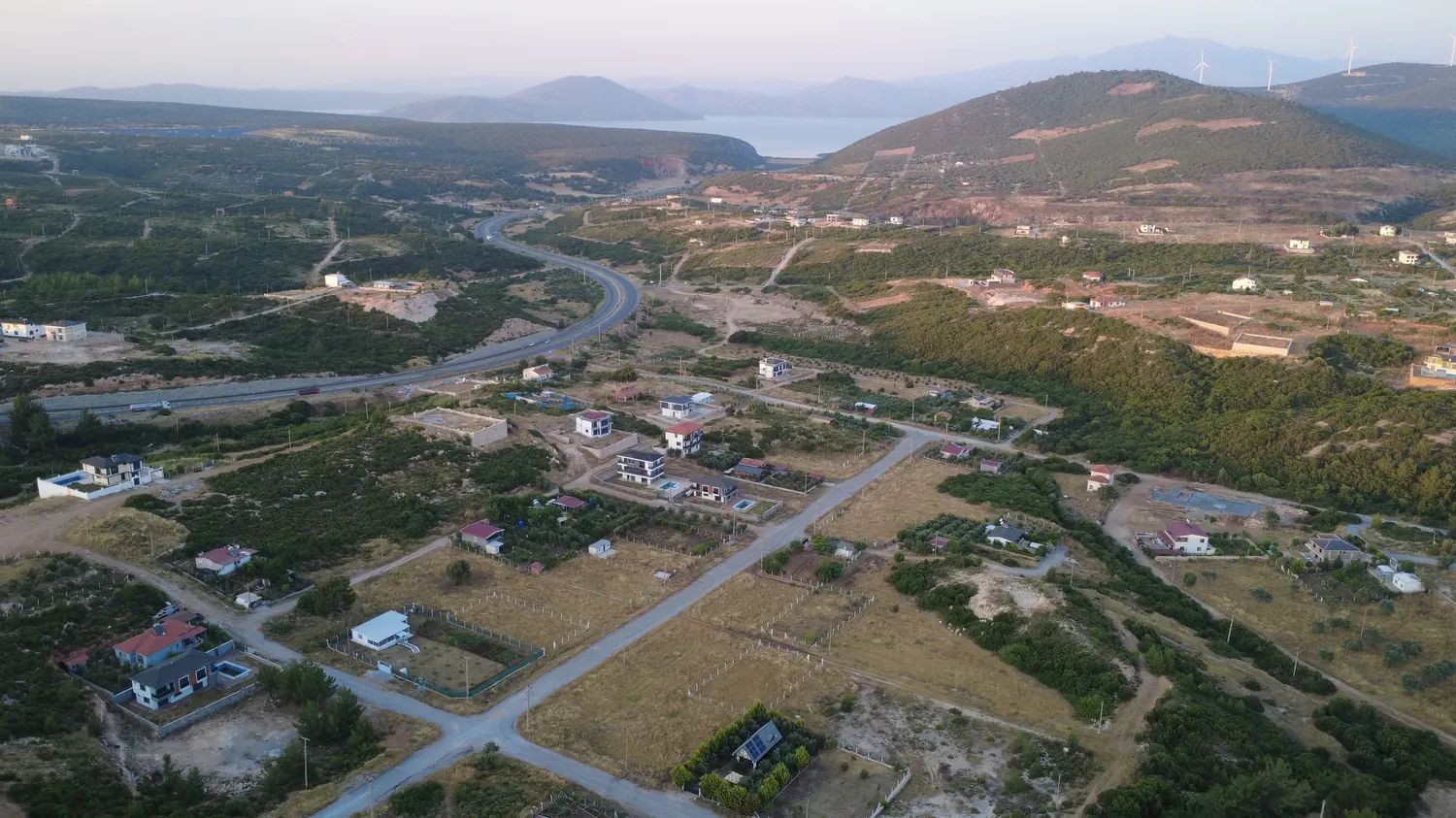
From thirty-five deeds to 2,708 plots
What everyone calls simply the Seyrantepe cooperative is formally registered as S.S. Didim Seyrantepe Arsa ve Konut Yapı Kooperatifi. Do not look for that name on a title deed, though — it does not appear there; what the deed shows is the official locality name, Kızıldamderesi.
The land sits on the edge of Akyeniköy, in the Kızıldamderesi area of what was then Yenihisar and is now Didim. The cooperative did not buy it in one piece: it assembled the site from thirty-five separate owners, merged the parcels, and reduced them to two freehold titles filed under map sheets 650 and 651. An environmental report followed, then development plans at 1:25,000, 1:10,000 and 1:5,000. On those plans each member's gross one-dönüm share became a net plot of 600 to 650 m² — 2,708 of them in total.
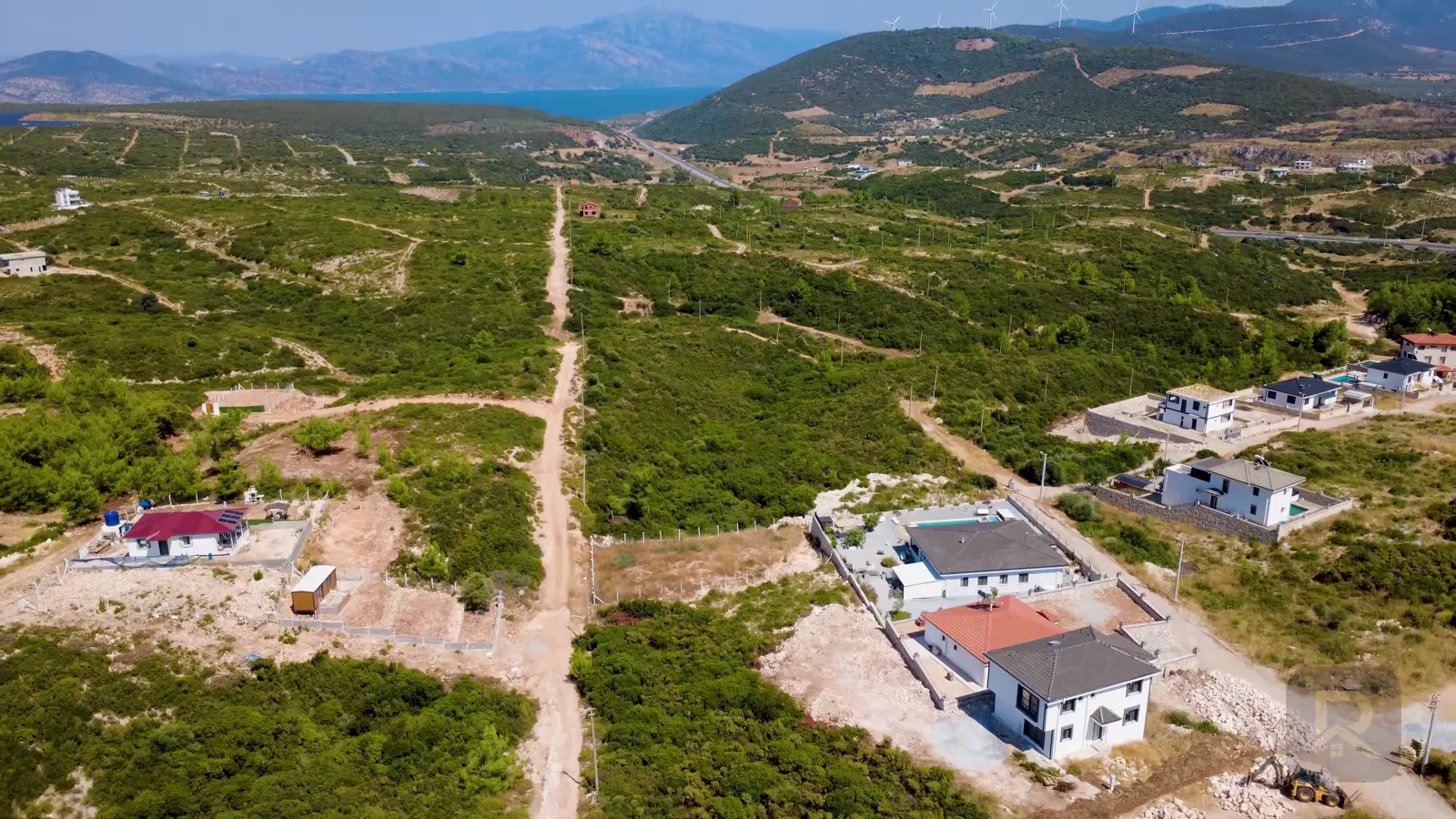
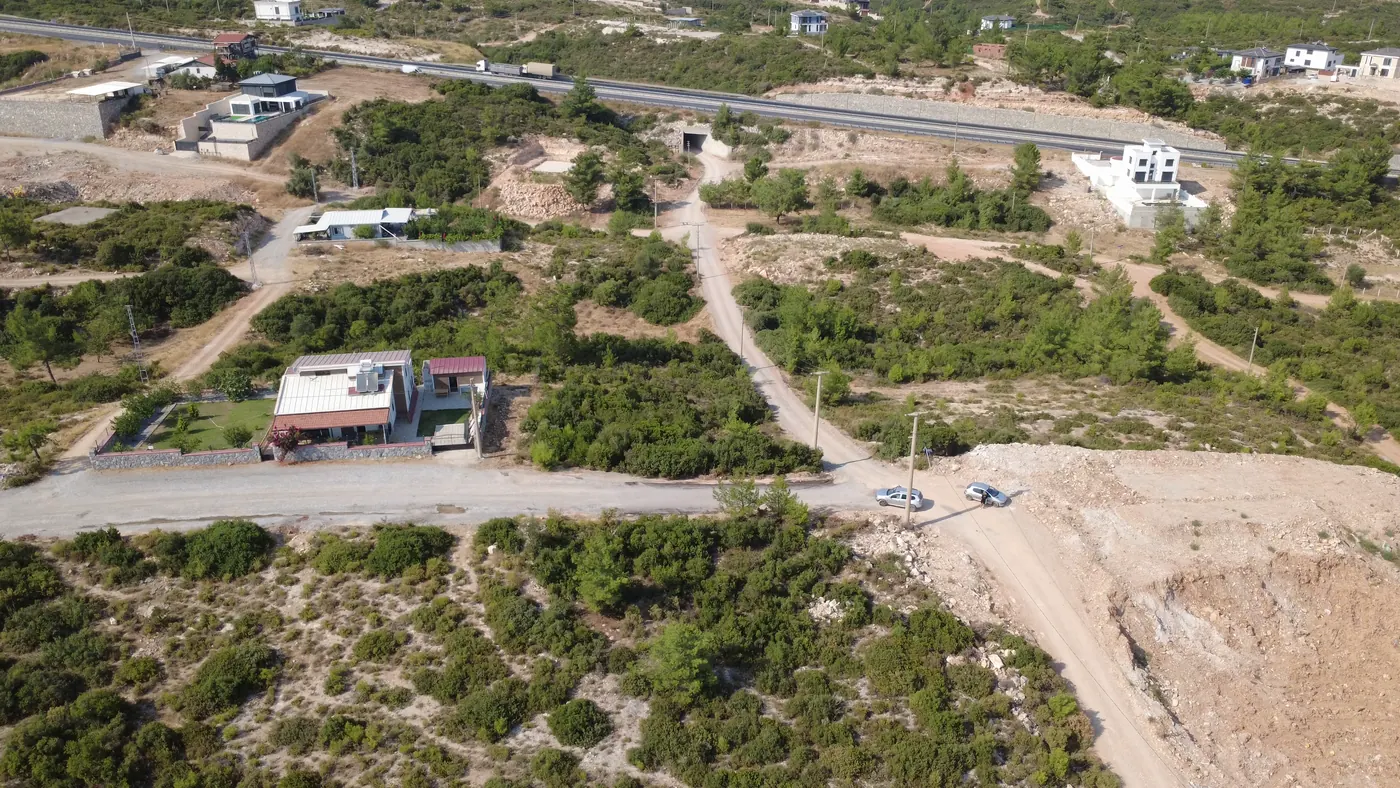
Allocation was settled in 1996 by a draw held before a notary, and individual title deeds were issued in members' own names. By the cooperative's own account, road, water and electricity were taken to every plot; because the Bodrum-Milas dual carriageway cuts straight through the site, the two halves were linked by an underpass. That history explains something you notice immediately on the ground today: the street grid is unusually regular for a Turkish hillside, because the whole neighbourhood was drawn at one table, once.
Where we stand. RedRock Properties is not part of the cooperative and does not represent it. The history above comes from the cooperative's own public pages, the legal points from official sources, and the rest from an estate agency that works on this hillside every week. For anything concerning your membership file, your counterpart is the cooperative's board and liquidation committee.
The draw was 1996. The view is 2026.
On the day of the draw, Seyrantepe was a slope with a few olive trees on it. It is now one of the first two or three places an overseas buyer asks about when they start looking at land in Didim. Roads have been surfaced, mains have reached the streets, villas have gone up one at a time — and where members once asked "which plot is mine", there are numbered streets and house numbers.
The distances in the old cooperative brochure still hold: roughly 17 km to Didim town centre, about 6 km to Akbük, 2 km to Lake Bafa, 90 km to Bodrum. What has changed is what those figures buy. In 1996, "17 km from town" meant remoteness. Today it means half an hour from a settled district with hospitals and clinics, schools and a weekly market that runs year-round. Plots on the upper contours look out across the gap between Lake Bafa and the Aegean; the lower ones trade that view for easier access. Two plots from the same cooperative, the same size, can be quite different pieces of land on nothing more than gradient and frontage.
The practical point for an absent owner: if you have not seen your plot in the past decade, the place in your memory is not the place on the ground. Neighbouring plots may have been built on, road levels re-cut, the gaps in your block closed up. Our Seyrantepe page shows the neighbourhood as it stands, and the area guide puts it in context with the rest of the peninsula.
"In liquidation" — what it means for your plot
The cooperative's registered name now begins with the words tasfiye halinde — in liquidation. That is not a distress notice; it is the name of a legal stage. Under Turkish cooperative law, liquidation is the winding-up of the legal entity: receivables are collected, debts settled, whatever assets remain in the cooperative's own name (common areas, social-facility land, bank accounts) are realised, and the balance is distributed among members. The cooperative's recent announcements sit squarely in that frame — general assembly notices, a tender for the sale of cooperative land, court notices.
Here is the distinction that matters to you. A plot that was individualised and registered in your own name is not a cooperative asset — it is your property. As a rule, the winding-up of the entity does not touch it, in the same way that a developer closing their company does not affect the deed to a flat they built. What liquidation genuinely reaches is the cooperative's own side of the ledger: unsold common land, membership fee arrears, litigation, accounts.
One exception, and it is the important one. Files that were never individualised — where the registry still shows a share rather than a plot, or where a deceased member's name has never been transferred to the heirs — sit outside that reassurance. In that case the answer comes from the registry record, not from a web page: obtain the current record first, then take your specific file to the cooperative. We work in property, not law; if your file is contested, instruct a Turkish lawyer.
The fear we hear most often is the blunt one: "if it is wound up, can they take my land?" For a plot held on an individual deed, that is not a transaction the cooperative can carry out unilaterally. If what unsettled you was a tender notice or a court announcement, look at which property it names — most concern land set aside for common use, not individual plots.
What your deed says today: four checks
The single most common thing we see in cooperative files is an owner who is guessing at the state of their own land. Four steps turn the guess into fact, and none of them costs anything.
- Read the registry record, not the paper. The deed in the drawer proves who owned the plot on the day it was printed. The live record at the land registry (Tapu Müdürlüğü) proves who owns it now — and it also shows whether you hold the whole plot or a share in something larger.
- Check the description line. Does the record describe the parcel as arsa (building plot) or as something else, such as tarla (field)? That single word governs everything from building rights to how the plot is taxed and how it will be valued.
- Ask for the encumbrances (takyidat). Mortgages, attachments, annotations — every entry attached to the plot over thirty years appears here. On long-neglected files the usual find is a tax-driven attachment; caught early, clearing it is routine.
- Confirm the boundary on the map. The land registry's public parcel query plots your block and parcel numbers onto satellite imagery. If the shape on screen does not match the place in your head, you want to discover that now rather than at a sale.
If the plot came to you by inheritance there is one more step: succession. Until a certificate of inheritance is obtained and the transfer registered, the plot stays in the deceased's name — it cannot be sold, mortgaged, and in practice cannot be built on. Our TAPU safety guide covers how to read and verify these records in detail.
What can be built on it now
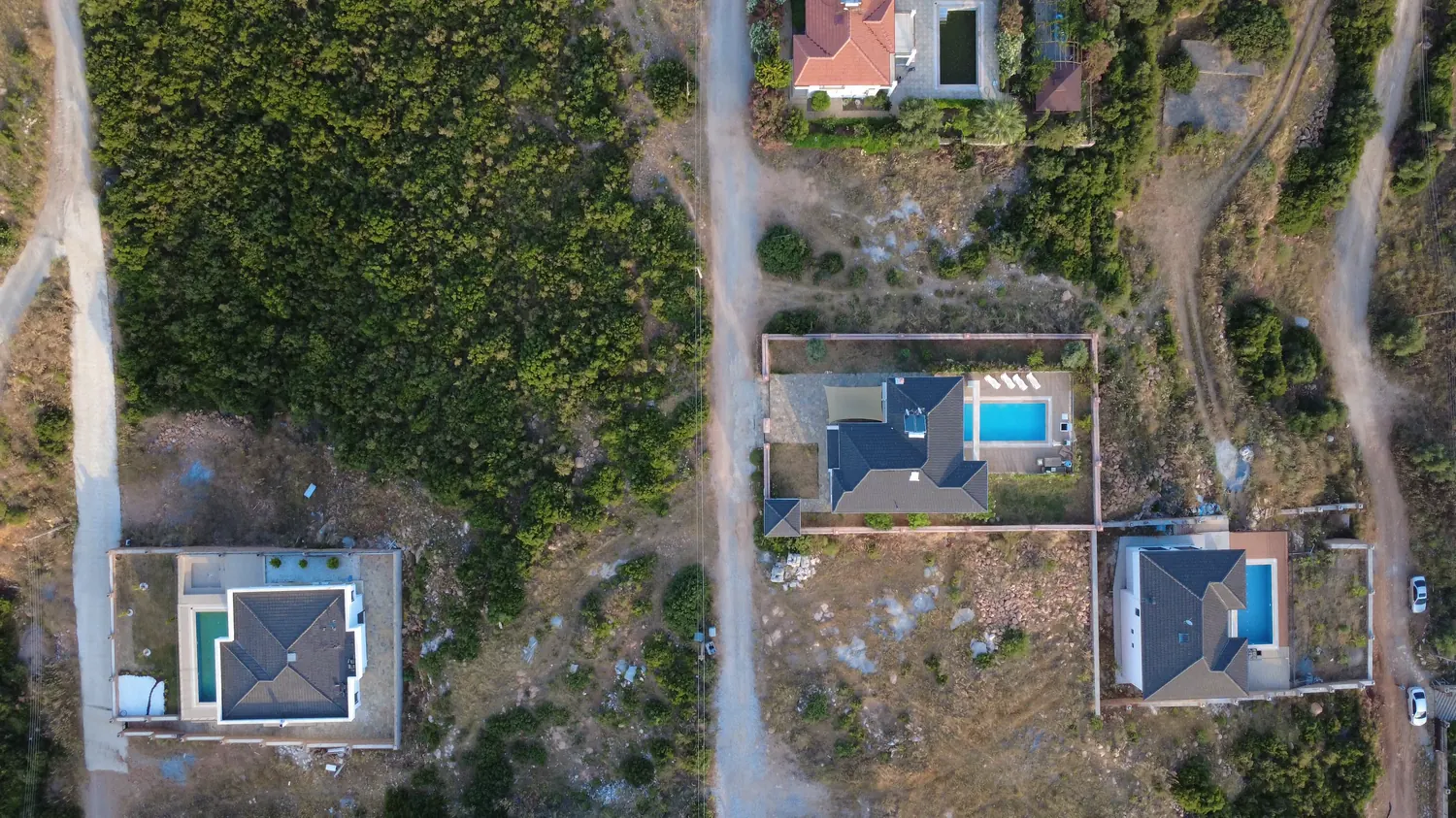
Older cooperative material mentions a "20% building permission", which was the site coverage ratio of its day. Thirty years later the binding document is not that sentence but a current zoning certificate (imar durumu) from the municipality: site coverage (TAKS), floor area ratio (KAKS), permitted storeys, building layout and setbacks. Plans get revised, and figures can differ block by block — the ratio that applies next door may not be the ratio that applies to you. Request the certificate against your specific block and parcel numbers, freshly dated.
What those numbers mean in practice — how many square metres of footprint and total build a 600 m² plot actually yields — is worked through with examples in our guide to reading a Turkish zoning certificate. If you are weighing up building rather than selling, the route from permit to habitation certificate, and what it costs at today's prices, is set out step by step in from plot to villa.
Property tax, fees and the municipality
Turkish property tax (emlak vergisi) becomes payable from the moment the deed is in your name, and the duty to declare sits with the owner. The cooperative reminds members of the same thing: the counterpart for tax is Didim Municipality. On plots where nothing has been declared for years, the tax accrues with late-payment interest, and it usually surfaces at exactly the wrong moment — during a sale or transfer. Asking the municipality for the position on your block and parcel is a single phone call or one counter visit.
Cooperative membership fees are a separate matter: collected annually for the cooperative's own running costs, and not tied to your deed. Even so, past fee accounts can come up during the liquidation process, so if a sale is on your horizon it is worth confirming your membership account is closed and clear.
Handling it from the UK or anywhere else
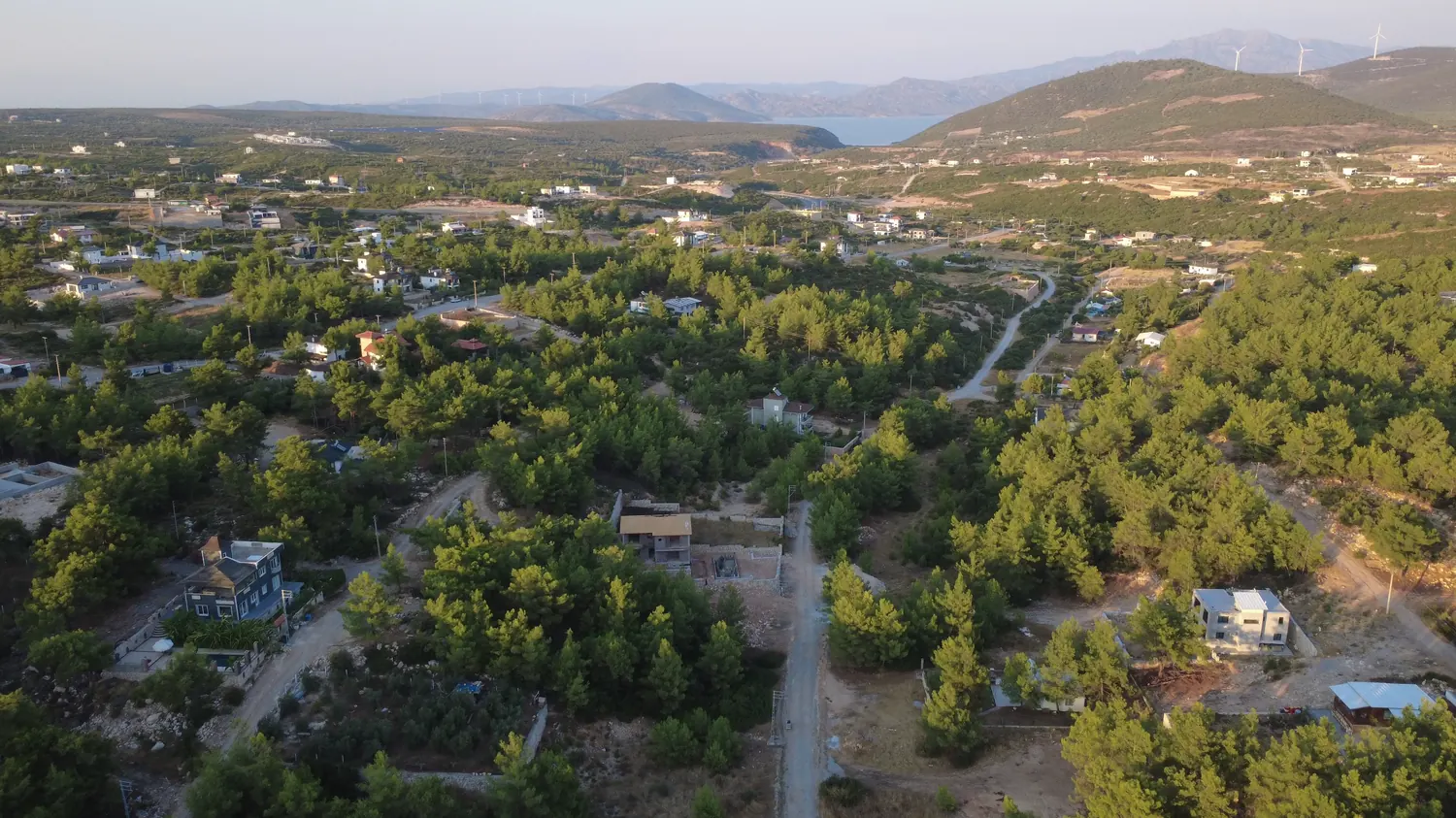
Most of the overseas owners we meet are dealing with this from a distance, and often after a bereavement. Three things are worth knowing before you book a flight.
You do not have to attend in person. Registry transactions can be handled by an attorney acting under a power of attorney (vekâletname). Prepared abroad, it is drawn up at a Turkish consulate or before a local notary with an apostille and a sworn translation, and it must name the transactions it authorises — a POA drafted only for a bank matter will not move a deed. Keep the scope narrow and specific, and give it to someone you would trust with the money.
Inheritance has its own sequence. Turkish immovable property passes under Turkish succession rules. The usual path is a certificate of inheritance, recognition of the foreign documents, then registration of the transfer at the land registry. Heirs frequently discover the plot only when a relative's papers are sorted out decades later; it is a well-worn procedure, not a lost cause.
Distance is not a valuation problem. We can photograph the plot as it stands today, pull the zoning certificate from the municipality and put the two next to comparable local sales, so that any decision you take is based on the land as it is rather than as it was described to you in 1996. That is what our property valuation service is for; if you would rather start with the lie of the land, regional consultancy is the lighter first step. You are welcome to look at what is currently changing hands on the hillside in the plots we currently have on the hillside — for instance plot 801/4 with its Lake Bafa view or corner plot 965/7 — useful context for judging where your own plot sits.
The cooperative area in photographs
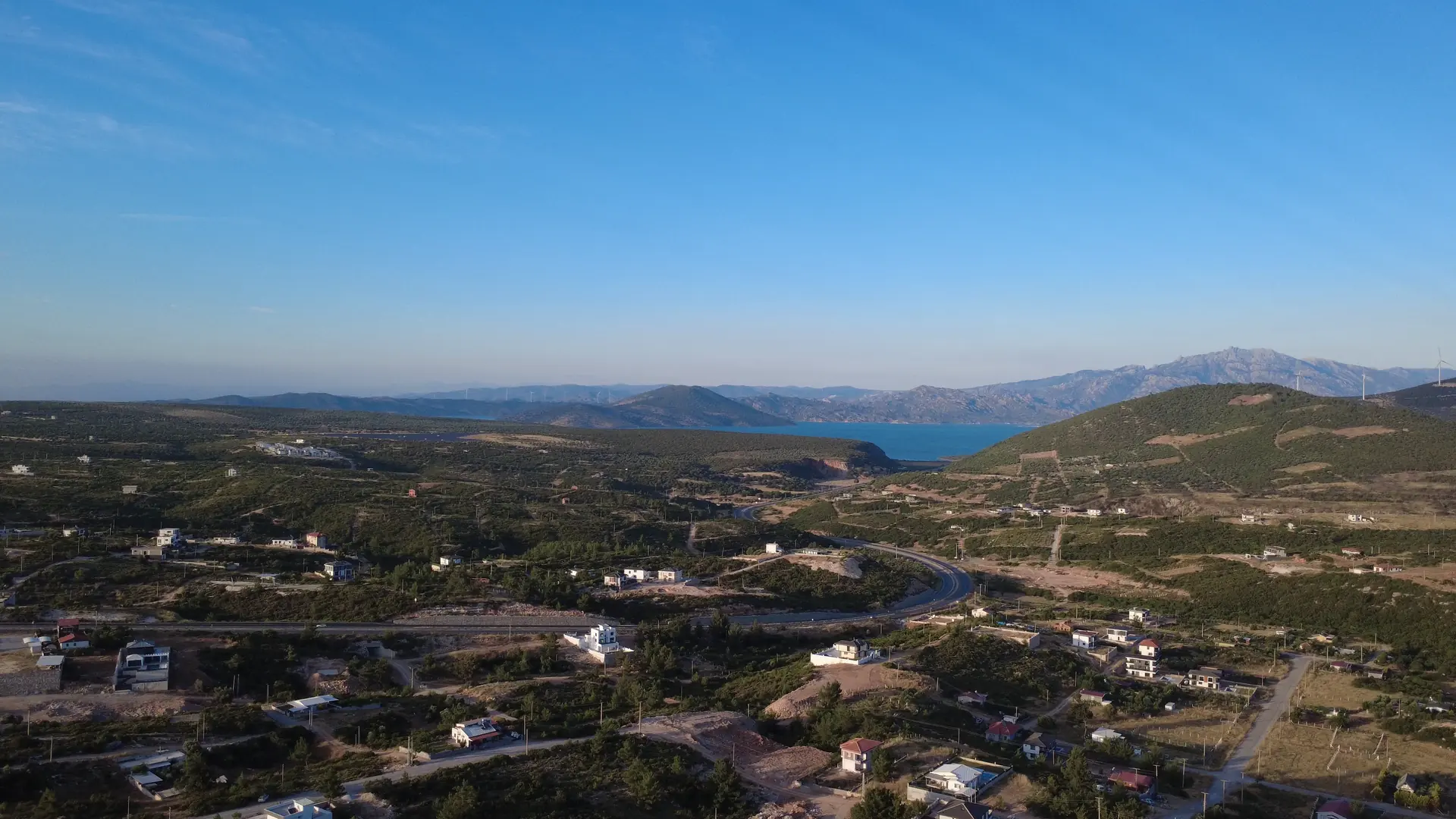
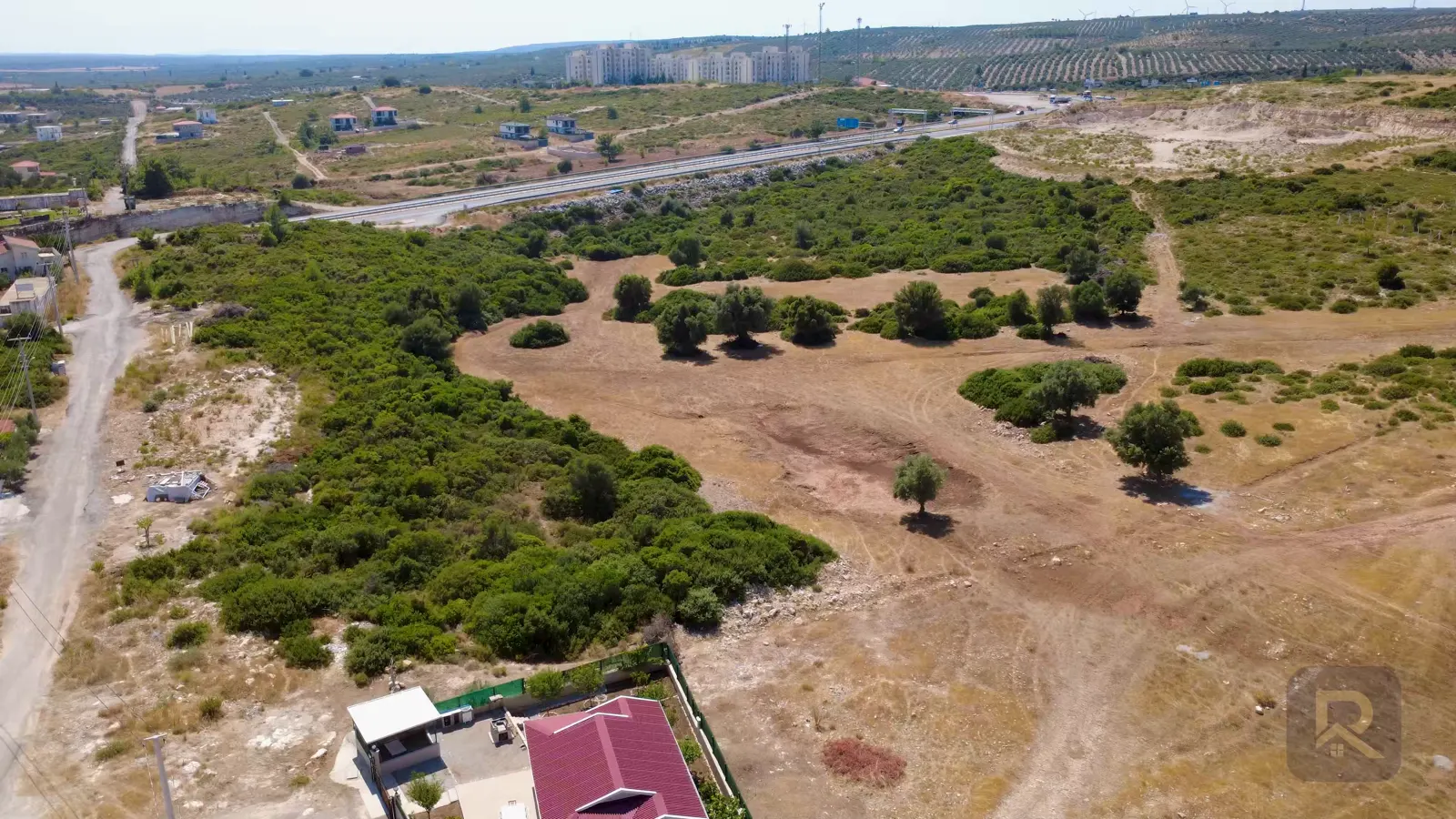
Recent drone frames for anyone wondering what the area looks like today — the plots, the street pattern and the Lake Bafa horizon. All frames are our own, shot on site.
Frequently Asked Questions
The cooperative is in liquidation — can I lose my plot?
A plot registered in your own name is your property, not a cooperative asset, and winding up the entity does not by itself affect it. Liquidation concerns the cooperative's own assets, receivables and common land. Files never individualised, or still in a deceased member's name, are a different case — start with the current registry record.
I have the old paper deed but no idea where the plot is.
The block (ada) and parcel numbers on the deed are enough. Entered into the land registry's public parcel query, they draw the boundary onto satellite imagery; from there the plot can be found and photographed on the ground.
How big are the plots?
The cooperative's subdivision worked to net plots of 600-650 m², with 2,708 created in total. The registered area for your own plot is what appears on the deed record and in the parcel query — that figure governs, not a brochure or a memory.
Can a foreigner still hold and sell this land?
In general yes — foreign nationals hold Turkish property on the same individual title deed as anyone else. The limits are national rather than local: eligibility depends on nationality, no more than 10% of a district's private land may be held by foreigners in total, and there is a 30-hectare ceiling per person, with clearance required at transfer for land near military zones. A plot already registered in your name has cleared those checks once; the land registry confirms the position for the transaction in hand.
Nobody has paid the property tax for years. What now?
It accumulates with late-payment interest and typically blocks a sale until settled. Didim Municipality can state the position against your block and parcel, and arrears can generally be regularised — better before a buyer is waiting than during.
Is RedRock connected to the cooperative?
No. We are an independent estate agency working in Didim, with no affiliation to the cooperative. The cooperative information here is drawn from its own public announcements and from official sources; for membership matters, deal with the board and the liquidation committee directly.